
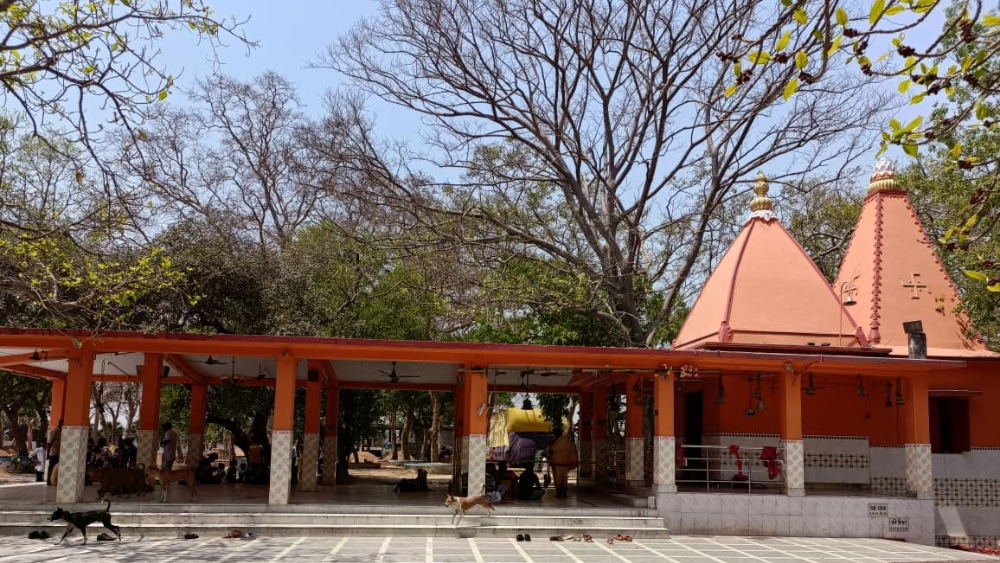

Imagine walking on the famous red soil of Birbhum with the sweet sound of Baul music playing in the background. Right in the middle of this beautiful setting lies Kankalitala Temple. Located just 9 kilometres away from the main town of Bolpur-Santiniketan, it’s an incredibly peaceful and holy temple. But it’s not just for those looking to pray; if you love exploring quiet, offbeat village roads and want to feel the true vibe of rural Bengal, this place is a must-visit.
The Mythological Roots: One of the 51 Shakti Peethas
Kankalitala Temple is a very important holy site because it is one of the 51 Shakti Peethas. The ancient story tells us that Lord Vishnu used his Chakra to cut the body of Goddess Sati to stop Lord Shiva’s destructive dance.
It is believed that the Kankal (which means the waist bone) of the Goddess fell right here. Because of this, the deity is worshipped here as Goddess Kankaleswari or Devgarbha, with Lord Shiva protecting her as Ruru Bhairava.
A Temple Without an Idol: The Sacred Kund
What makes Kankalitala unique among other Shakti Peethas is the absence of a traditional stone or metal idol in the main shrine. Instead, the focus of devotion is a Sacred Kund (a small, ancient pond or pit) located within the temple complex.
The Eternal Water:
The water of this pond is considered extremely holy and is worshipped as the physical manifestation of the Goddess. Local legends claim that the pond is connected to the Manikarnika Ghat in Varanasi through an underground stream and that its water never dries up, even during the harshest summers.
The Divine Portraits:
Inside the small, simple temple structure, you will find framed paintings of the Goddess, but the real spiritual energy is felt by the water’s edge.
The Mystic Ambience: Shmashan and the Kopai River
The atmosphere at Kankalitala Temple is heavy with a sense of “Tantra” and ancient mysticism.
The Mahashmashan:
Right next to the temple, there is an old cremation ground, Mahashmashan. In Bengal, these grounds are considered very powerful places for deep meditation. While places like Nimpith Ashram offer a very calm and quiet vibe for your spiritual journey, Kankalitala feels a bit more mysterious and raw. You will see old Banyan and Peepal trees here with red threads tied to their branches, which makes the whole place feel truly magical and divine.
The Kopai River:
The temple is situated on the banks of the Kopai River, a river immortalized by Nobel Laureate Rabindranath Tagore in his poems. During the monsoon, the river swells and paints a beautiful picture against the backdrop of the red soil (Khoai) and green fields.
How to Reach Kankalitala Temple:
Reaching Kankalitala is quite easy, especially if you are already visiting Santiniketan.
By Train:
Board a train from Howrah or Sealdah to Bolpur-Santiniketan (e.g., Santiniketan Express or Kaviguru Express). From Bolpur station, the temple is about 30–40 minutes away.
Local Transport:
The most charming way to reach is by hiring a ‘Toto’ (electric rickshaw). The ride through the tribal villages and mustard fields of Birbhum is a highlight of the trip.
By Road:
If you are driving from Kolkata or Rajpur Sonarpur, take the Durgapur Expressway (NH 19), head toward Panagarh, and then take the road to Bolpur.
Best Time to Visit
The ideal time to visit is between October and March. The weather is cool, making it pleasant to explore the open temple grounds and the riverbanks. If you visit during Shivaratri or the Bengali New Year (Poila Baisakh), you can witness grand rituals and local fairs.
Conclusion
If you ask me, Kankalitala Temple is one of those rare places where time seems to slow down. Sitting by the sacred Kund, surrounded by nature and the deep spiritual energy, is incredibly refreshing. It’s the perfect peaceful addition to your weekend getaway to Santiniketan.
Have you ever visited Kankalitala Temple or any other Shakti Peetha before? Or are you planning to visit soon? Let me know in the comments below—I would love to hear about your travel plans!
Why is Kankalitala so famous?
It is famous because it is one of the 51 holy Shakti Peethas in Hindu mythology. It is believed that the waist bone (Kankal) of Goddess Sati fell right at this spot.