
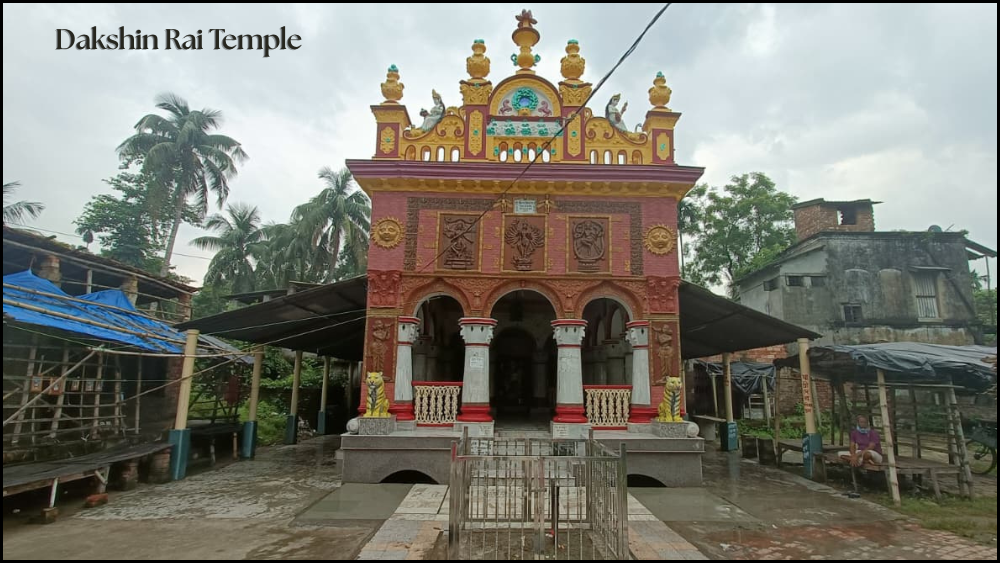

When exploring the vibrant district of South 24 Parganas, the intertwining of human survival, dense mangrove forests, and ancient folklore becomes incredibly apparent. One of the most fascinating cultural experiences in this region is visiting the Dhapdhapi Dakshin Rai Temple, located near Baruipur. Dedicated to the legendary “Tiger God” of the Sundarbans, this temple offers a unique glimpse into the indigenous belief systems of rural Bengal.
Who is Dakshin Rai?
To understand the significance of this temple, one must first understand the legend of Dakshin Rai (Lord of the South). In the dense, treacherous forests of the Sundarbans, the Royal Bengal Tiger is both a magnificent beast and a daily threat to life.
For centuries, the local honey collectors (Moualis), woodcutters (Bawalis), and fishermen have ventured into these deep creeks for their livelihood. Regardless of whether they are Hindu or Muslim, these forest workers worship Dakshin Rai before entering the jungle. He is believed to be the protector of the forest and the master of all tigers. Praying to him is seen as a way to ensure a safe return from the perilous mangroves. The worship of Dakshin Rai is often linked with the legend of Bon Bibi, the female guardian spirit of the forests. You can read more about this unique harmony on the West Bengal Cultural Heritage.
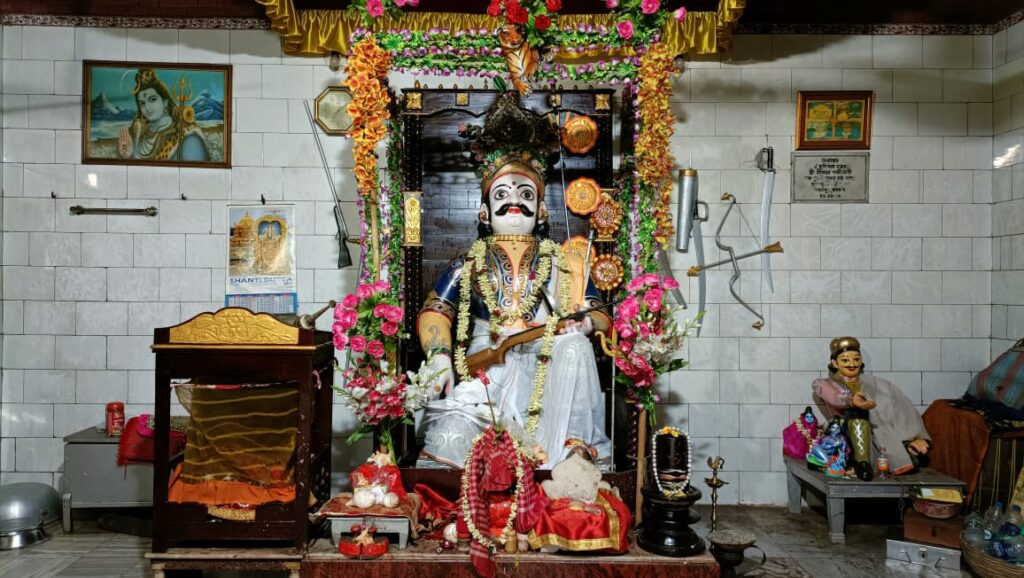
The Deity and His Unique Form
Unlike traditional Vedic deities found in mainstream Hindu temples, Dakshin Rai has a distinct, folk-art appearance. At the Dhapdhapi temple, the deity is depicted not as an ascetic or a traditional god, but as a robust, fearsome warrior.
He stands tall with a prominent, twirling moustache, dressed in regal attire resembling a local Zamindar (landlord) or a general. Armed with a bow and arrow, he is usually shown riding either a tiger or a horse. This powerful imagery perfectly captures the essence of a guardian deity who commands the wild.
The Atmosphere at the Dhapdhapi Temple
The temple at Dhapdhapi is one of the most prominent shrines dedicated to Dakshin Rai outside the core Sundarban area. The temple complex is vibrant and deeply rooted in local culture.
The Rituals:
Devotees from all walks of life come here to offer prayers, often bringing terracotta horses and tigers as tokens of their devotion (Manat).
The Grand Fair:
The best time to experience the true energy of Dhapdhapi is during the Bengali month of Poush (mid-January), specifically around Makar Sankranti. A massive, month-long village fair (Mela) takes place around the temple grounds. You will find endless stalls selling local handicrafts, traditional sweets like Jilipi and Joynagarer Moa, and an atmosphere filled with folk music and devotion.
How to Reach Dhapdhapi
Reaching this unique cultural site is very straightforward, making it an excellent half-day trip.
By Train:
The easiest way to get here is by taking a local train from the Sealdah South section to Baruipur Junction. From Baruipur station, you can easily hire an auto-rickshaw or a Toto to reach the Dhapdhapi temple, which is just a few kilometers away.
By Road:
For travelers starting their journey from the Rajpur Sonarpur area, getting to Dhapdhapi is incredibly convenient. It is a quick and straightforward drive down the Kulpi Road, crossing the Baruipur bypass. The drive takes you through picturesque suburban landscapes and takes barely 30 to 40 minutes.
Location on Maps: View the Dhapdhapi Temple Location
Why You Should Visit
Visiting the Dhapdhapi Dakshin Rai temple is not just a religious pilgrimage; it is an anthropological journey. It shows how the harsh realities of nature shape human faith. For a traveller, it’s a chance to witness a raw, unfiltered slice of Bengal’s folk traditions, far removed from the polished tourist trails of the city.
Conclusion
Visiting the Dhapdhapi Dakshin Rai Temple is more than just a religious trip; it is an exploration of the deep bond between nature, fear, and faith. For anyone looking to understand the true spirit of the Sundarbans and the cultural heritage of South 24 Parganas, this temple is an essential stop.
From the fierce warrior form of the “Tiger God” to the vibrant atmosphere of the village fair, every corner of Dhapdhapi tells a story of survival and devotion. If you are looking for a unique, offbeat getaway near Kolkata that combines history, folklore, and local flavours, this is the perfect destination for your next weekend.
[…] corner, you will find the local Santhali women in their traditional attire, performing rhythmic folk dances in a circle. Visitors are often encouraged to join in, making it a participatory celebration of […]
[…] their hectic lives. If you are planning a full-day trip, you can also explore other things at the Diamond Harbour route after visiting the […]